
Case Study – Leangen Arena, Norway
Beyond DSP
When Trondheim’s Leangen Arena required a new professional audio system, the engineering challenge extended far beyond loudspeaker selection.
The installation needed to deliver exceptional speech intelligibility for announcements, high-quality music playback and the flexibility required to support everything from daily training sessions to league fixtures and elite competition. At the same time, the system had to be intuitive to operate, straightforward to maintain and designed to support many years of reliable operation.
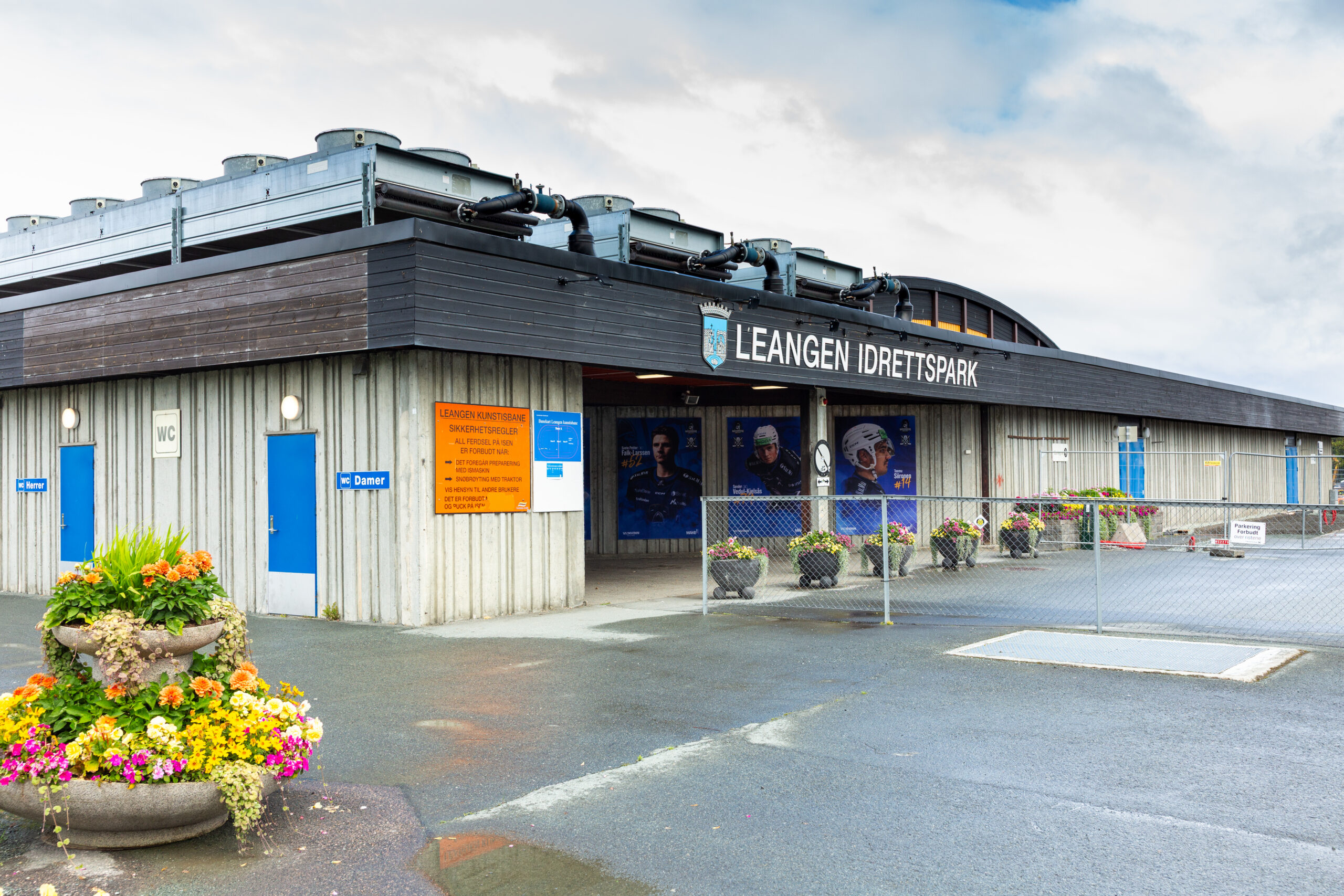
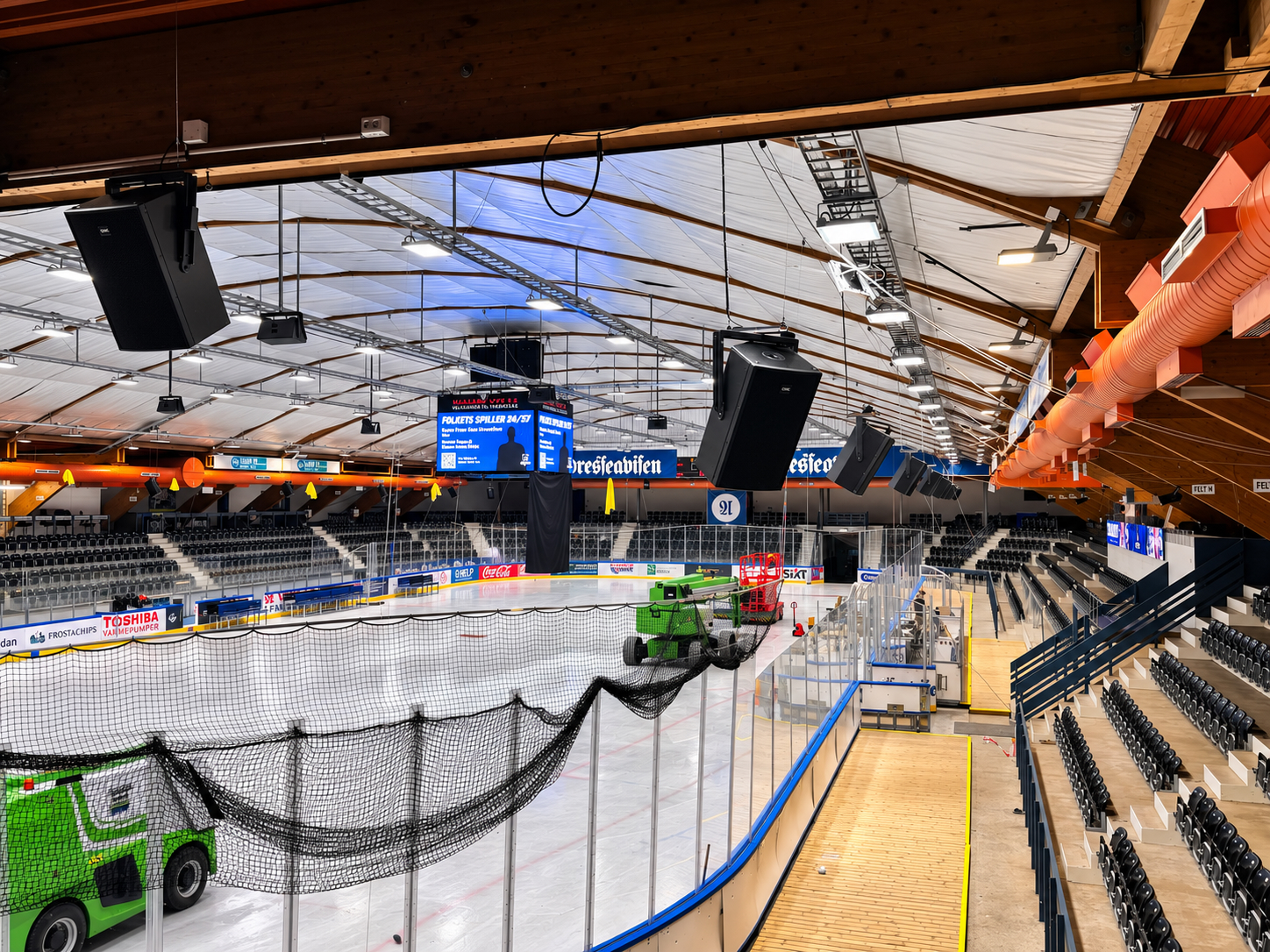
Leangen Arena and Sports Complex
For Avonlyd AS, founded on 1 February 2007 and today recognised as one of Norway’s most respected specialist integrators in the professional audio industry, these requirements called for a system where every engineering discipline worked together. Acoustics, loudspeaker placement, mechanical design, signal processing, networking and operational control were all considered as part of a single engineering process rather than independent technologies.
“A loudspeaker system is only as good as the infrastructure supporting it,” explains Edgar Andraa Lien, Partner, Founder and Sales Director Oslo at Avonlyd.
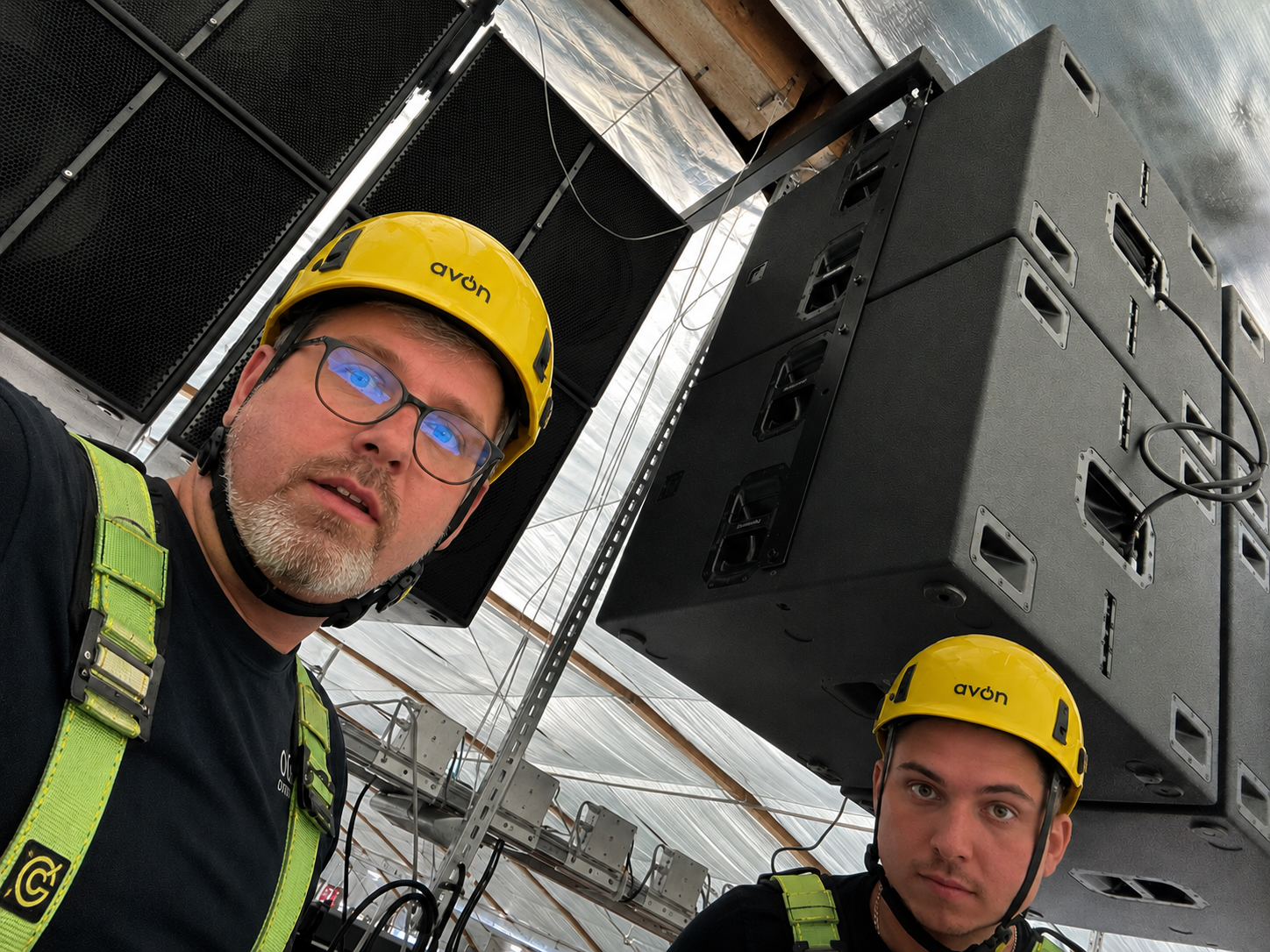
L-R Edgar and Sander Voll Nybro, AV Engineer at Avon
“Good loudspeakers are essential, but consistency comes from the way the entire system is engineered. Processing, networking and control determine how the installation performs every single day.”
That philosophy became the foundation of Leangen Arena design brief.
Engineering Before Installation
Like every major Avonlyd project, Leangen Arena was designed digitally before installation commenced.
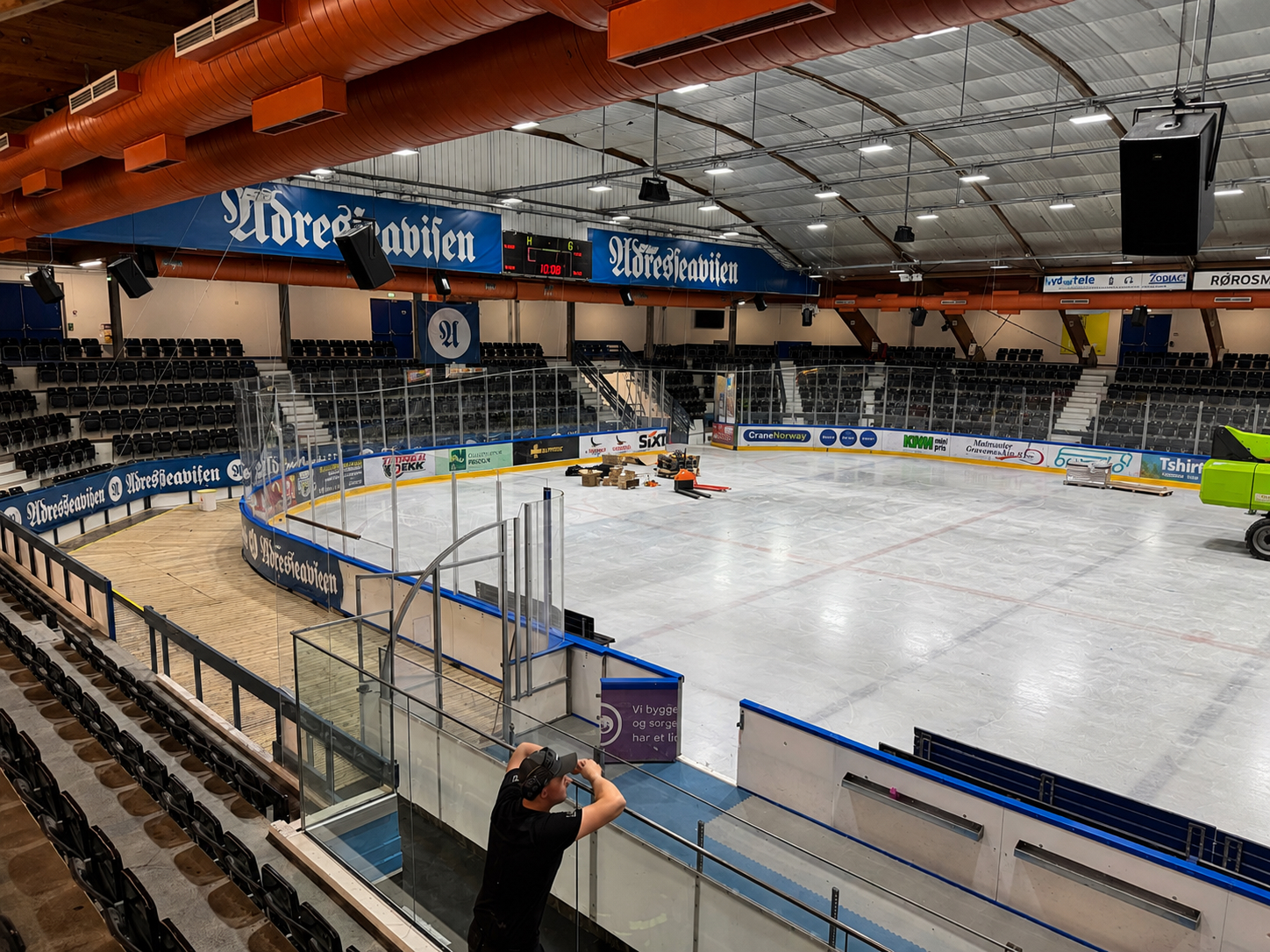
Site visits for measurements and checking existing infrastructure are still key…
Every loudspeaker position, amplifier rack, cable route and mechanical detail was first modelled in SketchUp before the complete system was verified using EASE.
Coverage prediction, loudspeaker aiming, delay values and expected speech intelligibility could therefore be analysed long before equipment arrived on site.
This engineering-first approach also defined the signal processing architecture.
Rather than adding DSP at the end of the design process, loudspeaker processing formed an integral part of the system from the earliest simulations onwards.
By the time installation began, every loudspeaker output, processing channel and amplifier location had already been planned.
Engineering Around the Building
One of the first architectural decisions was to let the processing topology follow the physical layout of the arena.
Instead of concentrating all processing within a single equipment room, Avonlyd designed a distributed architecture around three NST Audio VMX88 processors installed across two amplifier rack locations.
One amplifier rack houses a single VMX88 processor responsible for one long side of the arena together with the adjacent short side.
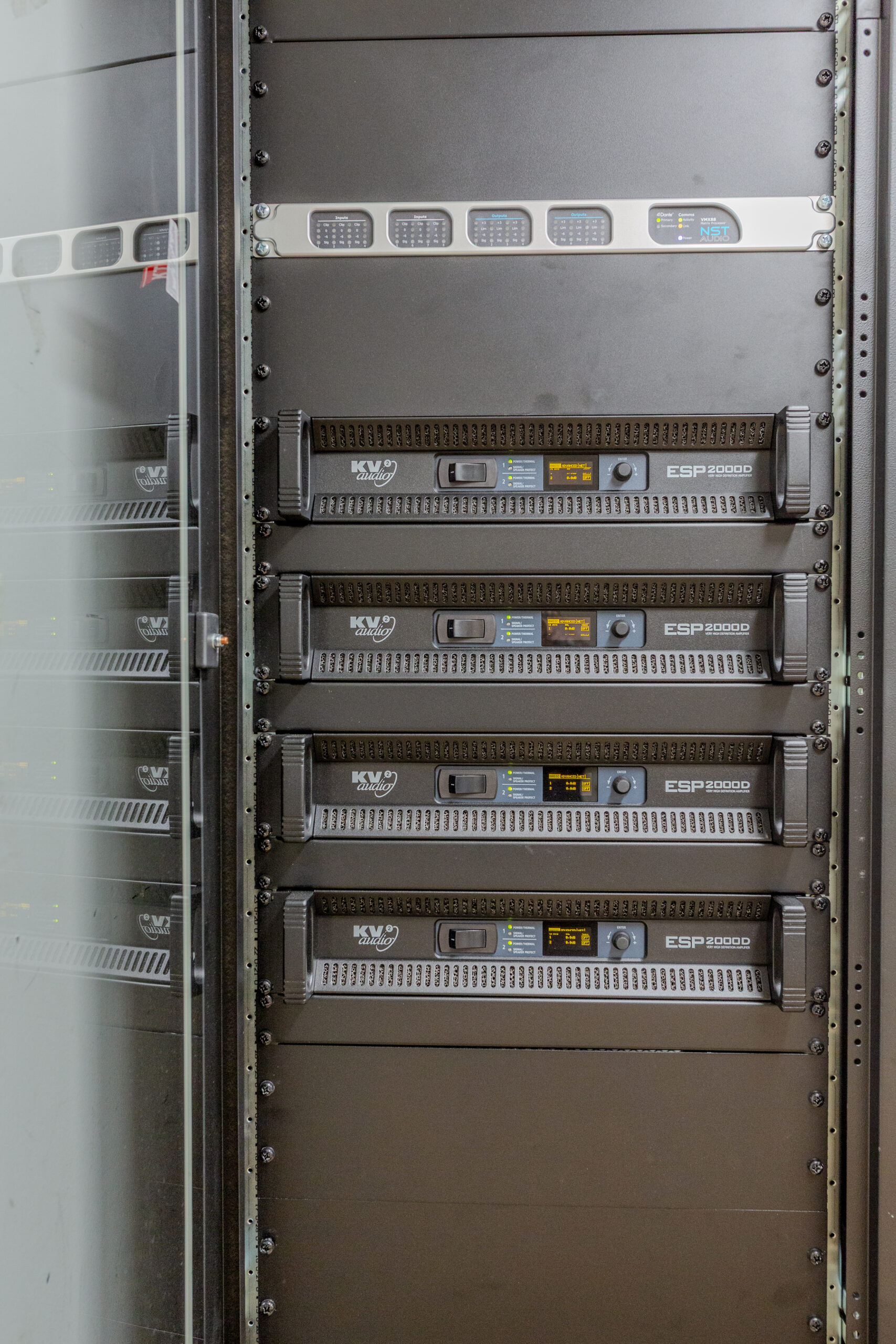
First of two amp and processing racks, VMX88 at the top
The second amplifier rack contains two additional VMX88 processors serving the opposite long side, the remaining short side, the VHD4.18 subwoofer system and the loudspeakers covering the playing surface.
Rather than viewing the installation as one large DSP system, Avonlyd divided it into logical engineering zones.
Processing, amplification and loudspeaker coverage all follow the same physical organisation, making commissioning more intuitive while simplifying diagnostics and future maintenance.
“Whenever possible, we try to let the physical installation define the system architecture. If processing, amplification and loudspeaker zones all follow the same logic, the system becomes easier to understand—not only during commissioning, but for every engineer who services it in the future.”
Why VMX88?
For Avonlyd, selecting the processing platform was never simply about providing crossover filters. The processor becomes the acoustic reference for the entire installation.
Each VMX88 is responsible for loudspeaker crossover filters, equalisation, delay alignment, limiting and optimisation within its designated system zones.
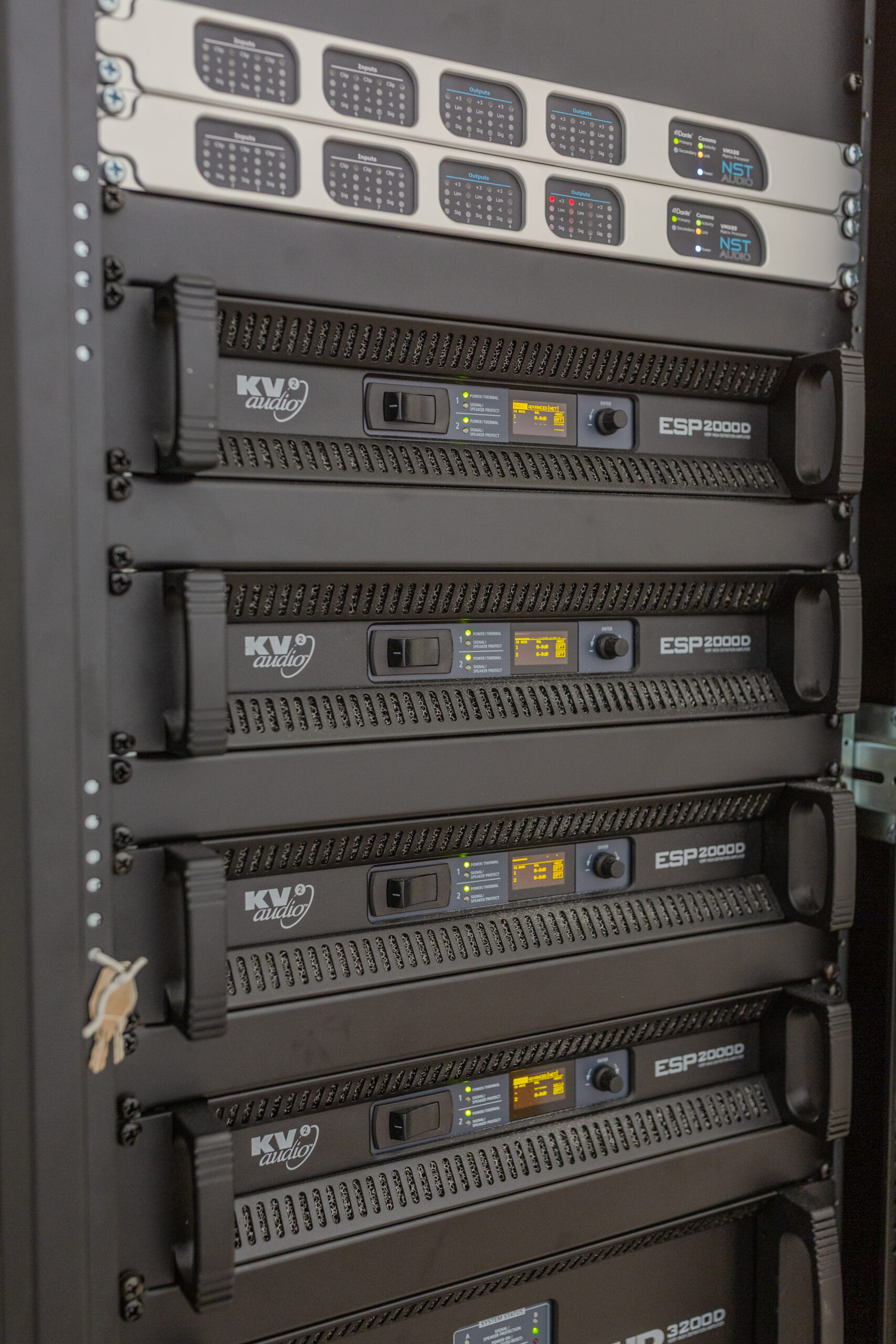
Second rack with a pair of VMX88s in control
As processing remains independent of the amplifier platform, loudspeaker optimisation can be maintained regardless of future amplifier upgrades or system expansion. This architecture also allows every loudspeaker parameter to be documented, verified and maintained within a common engineering platform.
“We wanted processing to remain completely independent from amplification. That gives us greater flexibility, simplifies future maintenance and ensures the loudspeaker system continues to perform exactly as originally commissioned.”
Dante Connects Everything
The distributed processing platform is supported by a complete Dante audio network spanning the entire installation.
Three Netgear M4350 managed switches provide network distribution, each equipped with redundant power supplies to maximise operational reliability.
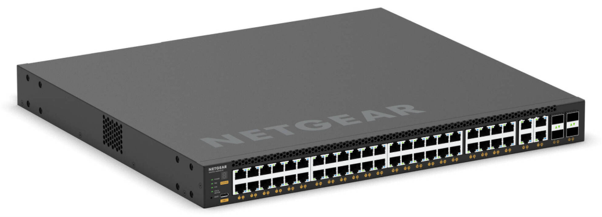
Netgear M4350 Series are certified for AV over IP so perfect for Dante signal distribution
The amplifier racks are interconnected using a fibre optic backbone, transporting programme audio, speech paging and control data throughout the arena.
Within this architecture, the VMX88 processors become the interface between network audio and loudspeaker optimisation. Every signal entering the system follows a clearly defined processing path before reaching the amplifiers and loudspeakers.
Designed for Remote Service
Engineering does not end once a system has been commissioned – long-term serviceability formed an equally important part of the design philosophy.
Soleux Smart PDUs automatically sequence all amplifiers according to operating schedules, presets and standby conditions, reducing unnecessary power consumption while protecting the equipment during startup and shutdown.
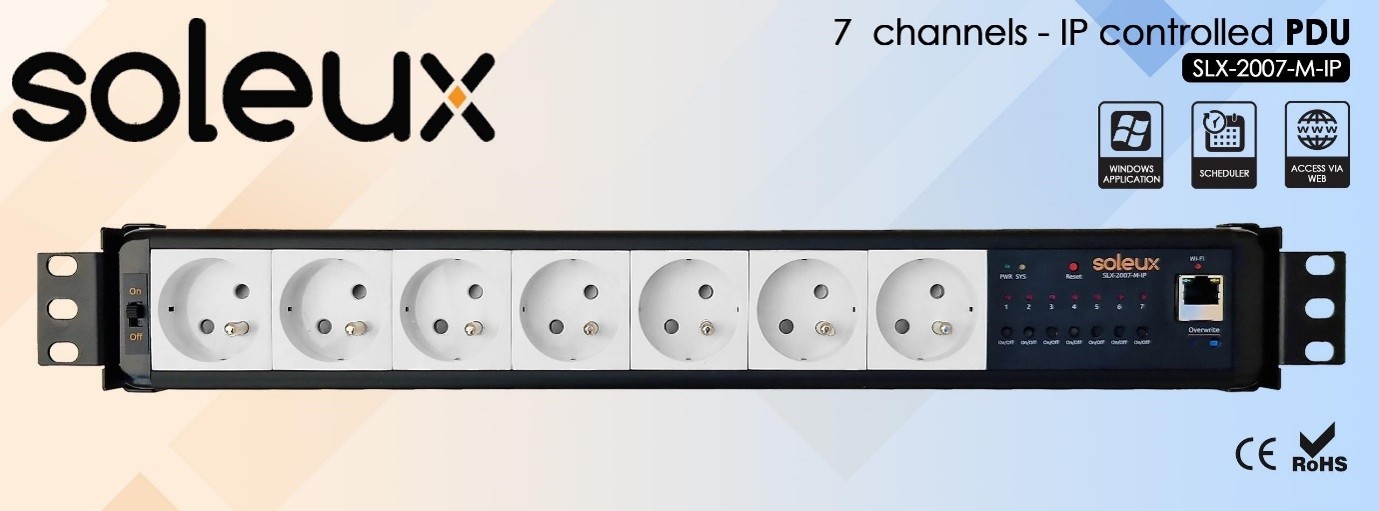
Soleux PDUs – Available in a range of socket types and also with WiFi
However, their greatest advantage is realised during maintenance. Each amplifier can be individually power-cycled remotely, allowing Avonlyd’s engineers to restart equipment following firmware updates or diagnostic work without travelling to the arena. Combined with the distributed VMX88 architecture, this significantly reduces maintenance time while maximising system availability.
“If we can resolve an issue remotely rather than driving several hours to site, everyone benefits—the customer, the venue and our service team.”
As a side note, we have checked out the control of Soleux PDUs via a VR2 for “local-remote” control of amplifiers etc. Our Technote is available in the Tech Library here(opens in new tab).
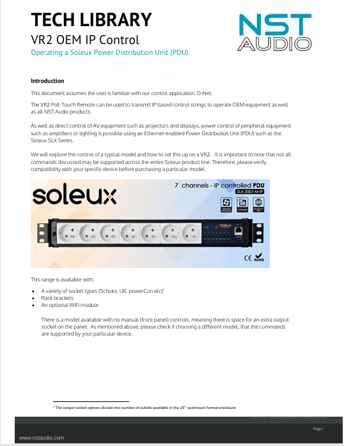
How to use a VR2 to control a Soleux Smart PDU…
Simple for the Operator, Powerful for the Engineer
One of Avonlyd’s guiding principles is that sophisticated engineering should never result in complicated operation. While the underlying infrastructure incorporates distributed processing, networked audio, intelligent power management and comprehensive loudspeaker optimisation, the daily user experience remains deliberately straightforward.
Overall system control is provided by a Yamaha MRX7-D, responsible for speech paging, music source selection, Dante routing, preset recall and user control.
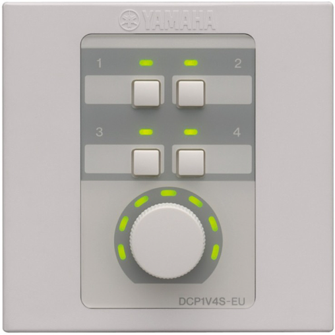
Typical Yamaha DCP range of controllers
Wall-mounted Yamaha DCP controllers provide simple access to the functions required by arena staff, while a Yamaha DM3 digital mixing console offers additional flexibility whenever live announcements, presentations or special events require operator control.
The objective was never to expose users to the complexity of the system. Instead, the technology operates almost invisibly, allowing staff to focus entirely on running the venue.
“The best compliment we can receive is when operators don’t have to think about the technology,” says Lien. “If the system is intuitive, reliable and simply does what it’s supposed to do every day, then we’ve achieved our objective.”
Engineering for Long-Term Ownership
For Avonlyd, commissioning marks the beginning of a system’s operational life rather than the completion of a project. Every engineering decision at Leangen Arena was therefore evaluated not only for its acoustic performance, but equally for its impact on future maintenance, diagnostics and system expansion.
The distributed VMX88 architecture provides clearly defined processing zones.
The Dante network simplifies routing and future integration.
The fibre backbone provides bandwidth and resilience for future expansion.
The Soleux Smart PDUs minimise service time by allowing engineers to remotely restart individual amplifiers whenever required.
Combined with comprehensive engineering documentation produced during the design phase, the result is an installation designed not only to perform today, but to remain straightforward to support throughout its operational life.
“A well-engineered system should be just as easy to service in ten years as it is on the day it’s commissioned,” explains Lien. “That’s something we think about from the very beginning of every project.”
Beyond Processing
Although the three VMX88 processors form the heart of the installation, their role extends beyond loudspeaker management.
By distributing processing across logical engineering zones, the system mirrors the physical structure of the arena itself. Each amplifier rack becomes responsible for clearly defined loudspeaker groups, while the Dante network binds the entire installation together as a single integrated platform.
Rather than viewing processing, networking and control as separate disciplines, Avonlyd approached the installation as one coherent engineering system.
That philosophy has become increasingly important as modern venues demand greater flexibility, higher reliability and simpler day-to-day operation.
At Leangen Arena, the result is an audio infrastructure where every subsystem supports the others.
The loudspeakers deliver the performance.
The processing maintains consistency.
The network provides flexibility.
The control system simplifies operation.
Together, they create an installation engineered not simply for commissioning day, but for many years of dependable service.
System Overview
Loudspeaker Processing
3 × NST Audio VMX88
Providing:
- Loudspeaker crossover filters
• Equalisation
• Delay alignment
• Loudspeaker limiting
• System optimisation
• Preset management
Distributed across two amplifier rack locations.
Audio Network
Complete Dante infrastructure comprising:
- 3 × Netgear M4350 GSM4328 managed switches
• Redundant power supplies
• Fibre optic backbone between equipment rooms
Transporting:
- Programme audio
• Speech paging
• Control signals
Distributed Amplifier Architecture
Two amplifier rack locations.
Rack Location 1
• 1 × NST Audio VMX88
• Amplifiers serving one long side and the adjacent short side.
Rack Location 2
• 2 × NST Audio VMX88
• Amplifiers serving the opposite long side, remaining short side, VHD4.18 subwoofers and the loudspeakers covering the playing surface.
System Control
Yamaha MRX7-D
Providing:
- Speech paging
• Music source selection
• Dante routing
• Preset recall
• User control
• Fire alarm muting
Operator interfaces:
- Yamaha DCP wall controllers
- Yamaha DM3 digital mixing console
Intelligent Power Management
Soleux Smart PDUs
Providing:
- Automatic amplifier sequencing
• Timer-based operation
• Preset-controlled startup
• Standby management
• Remote power cycling of individual amplifiers
• Simplified firmware updates
• Remote diagnostics
Programme Sources
- Bluetooth
• USB-C
• Analogue programme inputs
• Sennheiser wireless microphone systems
• Auracast assistive listening
Project Team
System Design, Engineering & Integration:
Avonlyd AS
Lead System Engineer:
Edgar Andraa Lien
Partner, Founder & Sales Director Oslo
Processing Platform
NST Audio
Conclusion
For Leangen Arena, the final installation demonstrates that outstanding audio performance depends on far more than loudspeaker selection alone.
By combining detailed acoustic modelling with distributed processing, intelligent networking and carefully considered system architecture, Avonlyd created an installation where every subsystem contributes to the overall result.
The three NST Audio VMX88 processors are not simply loudspeaker management devices—they form the intelligence that links acoustic design, signal processing and operational reliability into a single engineering platform.
The outcome is an audio system that delivers exceptional clarity for speech, consistent music reproduction and dependable day-to-day operation, while remaining easy to maintain, straightforward to expand and engineered for many years of reliable service.
[Transcript supplied by Avonlyd, AV Integrator and our Norwegian Distributor]
This case study is also available as an offline download here.